Hum the chorus of "...Baby One More Time," but flatten every note to a single pitch. Same rhythm, no melody. You'll notice something strange: the hook still works. The rhythm alone carries it.

Now try the opposite. Sing the correct pitches, but make every note the same length, evenly spaced on the beat. The hook collapses. It sounds like a music theory exercise.
This gets at the principle that sits at the center of Max Martin's songwriting: rhythm is the hook, and pitch colors it. Most songwriters compose the other way around -- they find the notes first and fit rhythm underneath. Martin starts with the rhythmic shape and lets pitch serve the groove. The distinction sounds subtle, but it changes everything about how his songs stick in your head.
Syncopation: The Push-Pull Engine
The foundation of Martin's rhythmic approach is syncopation, placing notes between the strong beats rather than on them. A melody that lands squarely on beats 1-2-3-4 sounds stable but predictable. A melody that slides between those beats creates tension, momentum, and the physical sense of being pulled forward.
Can't Stop the Feeling!
Justin Timberlake
The first half of the chorus phrase is packed with syncopated rhythms -- notes landing on the "and" between beats, creating a bouncing, irresistible forward motion. Then the second half resolves into steady quarter notes. That contrast between syncopated energy and straight resolution is what makes the chorus feel like it lifts you up and then lets you exhale.
The Melodic Math ebook frames this as a balance problem. Without enough syncopation, a melody feels rigid or march-like. With too much, it becomes chaotic, just rhythmic mush. The trick is managing what the ebook calls the "metarhythm": the overall rhythmic relationship between every element in the track.
One practical rule that falls out of this: if the vocal melody is heavily syncopated, keep the instruments straighter. If the vocal sits on the beat, let the bass or percussion syncopate underneath. The layers push against each other, and that friction is what makes a track groove.
Tempo changes how syncopation feels. At higher tempos (150+ BPM), eighth-note syncopations create a driving energy. At slower tempos (90-110 BPM), you may need sixteenth-note syncopations to generate the same rhythmic tension.
The Pop Clave: A Hidden Blueprint
Behind many of Martin's rhythmic choices sits a pattern most pop listeners have never heard of: the clave.
Rooted in Afro-Cuban music, the clave distributes five rhythmic accents across two measures. The 3-2 clave places three hits in the first bar and two in the second; the 2-3 clave flips this. These patterns rarely appear explicitly in pop music, but they function as what the Melodic Math ebook calls a "syncopation blueprint" -- an underlying framework that guides where notes land and where silence falls.
Martin's songs use a variation the ebook calls the "Pop Clave," where the first note in the three-hit measure is anticipated by an eighth note. This small shift creates the specific rhythmic feel that runs through decades of Max Martin productions. Catchy melodies accent the clave's strong points while rests land on its weak beats. The pattern is invisible, but its absence is immediately felt -- songs that violate the clave's logic tend to feel "off" without anyone being able to explain why.
Analyze a favorite pop melody for its clave orientation. Determine whether the phrase follows a 3-2 or 2-3 pattern by finding which measure has a note on the 4th beat anticipating the next bar. Then check whether your own melodies respect or fight that orientation.
Silence as Percussion
Martin uses absence as aggressively as he uses sound. A well-placed rest in a vocal melody gives the previous phrase room to breathe, creates anticipation for the next phrase, and lets the listener's brain fill in the gap, which generates engagement.
Amateur songwriters tend to overload their melodies, packing notes into every available space. Professional pop writing does the opposite. It leaves holes.
Blinding Lights
The Weeknd
The synth riff that opens the song sits slightly off the beat, creating a restless, anticipatory energy. But what makes it stick isn't just the syncopation -- it's the spaces between the notes. Those gaps give your ear time to process each phrase before the next arrives. The rests are as much a part of the hook as the notes themselves.
The ebook puts it directly: "Silence can emphasize key moments, create rhythmic tension, or provide contrast between sections. A well-placed rest can make a hook hit harder and a groove feel tighter."
Rhythmic Contrast Between Sections
One of Martin's most consistent structural moves is shifting the rhythmic feel between verse and chorus without changing the tempo. The song stays at the same BPM, but the rhythmic density and note duration change, and the effect is dramatic.
A common pattern is for the verse to use short, rapid-fire notes (high rhythmic resolution) while the chorus opens into longer, sustained notes. Or the reverse -- a legato verse that contrasts with a staccato, percussive chorus. Either way, the shift in note duration creates the sensation of a gear change. The song feels like it accelerates or opens up, even though the clock speed is identical.
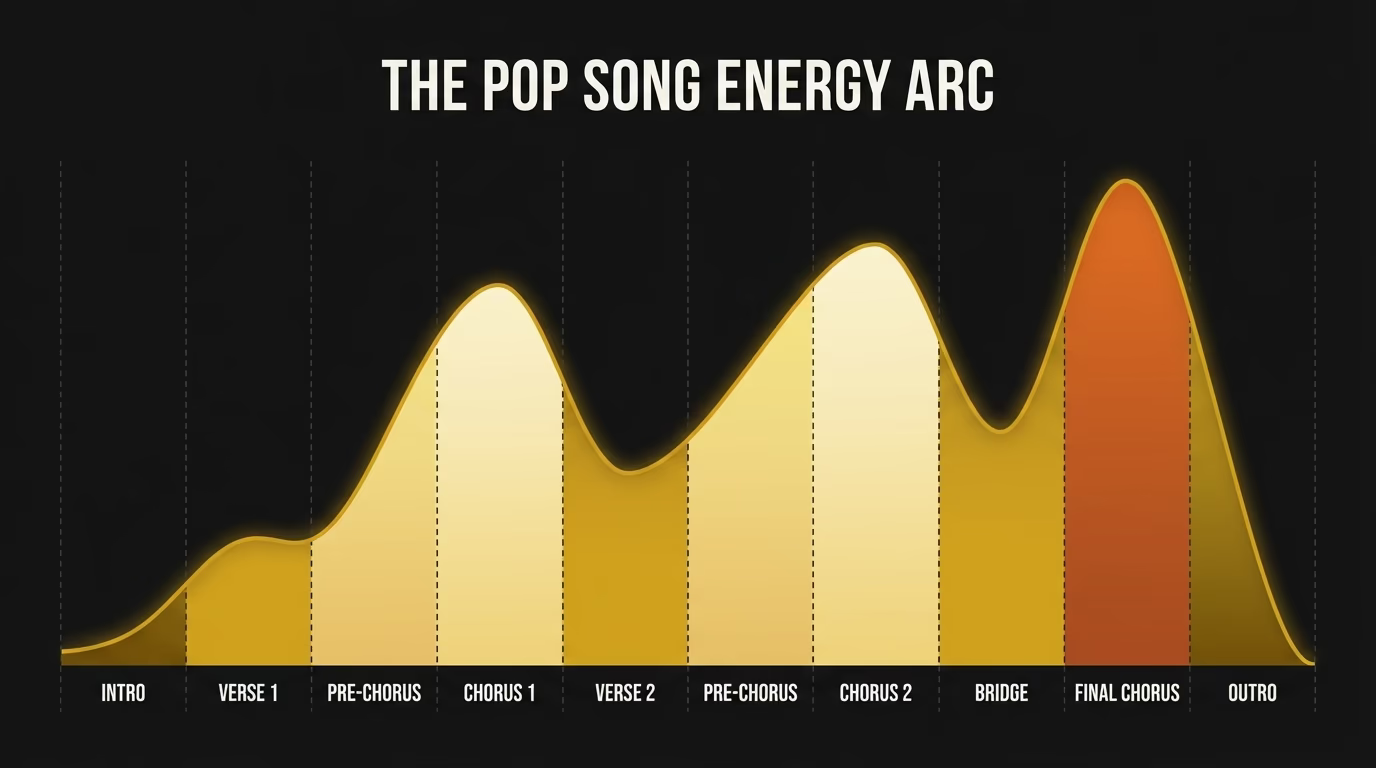
This technique extends to the boundary between singing and rapping. Martin and his collaborators have increasingly blurred that line, using spoken or rapped verses with high rhythmic density that give way to melodic, sustained choruses. The contrast in note duration between sections keeps the ear engaged and makes the chorus arrival feel like a release.
BPM of '...Baby One More Time' -- a walking pace that lets syncopation do the heavy lifting
Phonetics: Words as Rhythmic Instruments
Martin's rhythmic thinking extends beyond melody into the actual sounds of the words. The Melodic Math ebook reveals that his team often starts with "gibberish" or scat vocals -- nonsense syllables chosen for their rhythmic and phonetic properties. The words come later, selected to fit the syllable structure that already exists.
This means consonants function as percussion. Hard sounds -- K, T, P -- create sharp attacks that accent rhythmic hits. Placing "tonight" or "party" on a syncopated beat lets the consonant punch through the mix. Softer consonants, meanwhile, smooth over transitions between phrases.
Vowels serve the opposite role. Open vowels -- "ah," "oh," "oo" -- sustain well on held notes and carry emotional weight. Tighter vowels -- "ih," "eh" -- suit rapid, rhythmic passages where the syllables need to move fast.
The implication for songwriting is significant: if a lyric doesn't rhythmically fit the melody, changing the words is the right move, not adjusting the rhythm. The rhythmic shape was there first, and it should be preserved.
If the syllables don't hit Max's ear right, it's not Melodic Math.
Where the Melody Starts
One more rhythmic variable that Martin manipulates deliberately: where the vocal melody enters relative to the downbeat.
A melody that starts on beat 1 feels grounded and declarative. One that starts just before beat 1 -- on the "and" of beat 4 in the previous measure -- creates momentum, a sense of the singer leaning forward into the phrase. And a melody that starts after beat 1 feels laid-back or hesitant.
Martin typically varies this across sections. The verse might enter before the downbeat for momentum while the chorus lands cleanly on beat 1 for impact. The bridge starts somewhere else entirely for contrast. This variation in placement keeps the song dynamic across repeated sections -- even when the chord progression stays the same, the rhythmic entry point makes each section feel distinct.
If you're stuck on a bridge, look at where your verse and chorus melodies enter the bar. Then deliberately start the bridge melody at a different point. This simple change often unlocks a section that felt stale.
Building a Rhythmic Toolkit
The practical takeaway from Martin's approach is to start analyzing songs for rhythm before pitch. Strip a melody down to its rhythmic skeleton. Clap it. Tap it. Notice the syncopation patterns, the placement of rests, where phrases begin and end relative to the downbeat. Find short rhythmic motifs that feel distinctive, then reshape them into your own melodies with different pitches, different words, different harmonic contexts.
This isn't imitation -- it's the same process Martin himself uses. The Melodic Math ebook describes his practice of studying hit songs by breaking them down to their rhythmic components, extracting the patterns that work, and reinventing them in new material. The rhythm comes first. Everything else follows.
Syncopation, the pop clave, silence as percussion, rhythmic contrast between sections -- these sit underneath every melodic choice Martin makes. The Melodic Math ebook treats rhythm as a first-class element alongside melody and harmony, covering how rhythmic density shifts between verse and chorus and how phonetic choices (consonants as percussion, vowels as sustain) tie rhythm to lyric writing. Building hooks rhythm-first is where the ebook starts; the rest follows from there.