The difference between a good pop song and one that moves people usually comes down to contrast. Not the melody alone, not the production alone, but the distance between the quiet parts and the loud parts -- the spare verse that makes the chorus feel like a wall of sound, the tension that makes the release worth waiting for.

Our ears are wired to notice change. A constant, unchanging sound disappears from attention. A shift in volume, texture, or intensity grabs it back. Songs that maintain the same energy level throughout feel flat regardless of how strong the melody is, while songs that manage their energy carefully feel alive.
Two kinds of contrast
The ebook identifies two forms of contrast that work differently and serve different purposes.
Simultaneous contrast happens when opposing elements occur at the same time. An upbeat instrumental paired with melancholic lyrics. A major-sounding melody over a darker minor progression. Electronic drums alongside acoustic guitar. These combinations create depth -- think of Robyn's "Dancing On My Own," where a pulsing dance beat makes the heartbreak in the lyrics hit harder than a ballad arrangement ever could.
Sequential contrast happens between sections. The verse is sparse, the chorus is full. The verse melody is conversational, the chorus melody soars. The verse rhythm syncopates while the chorus locks onto the downbeat. This is the structural contrast that gives a song its dynamic arc.
Toxic
Britney Spears
Sequential contrast at work: the verse uses a near-monotone, spoken-style melody that sits low and intimate. The chorus shifts to a soaring, angular melodic line with wider intervals and higher energy. The gap between the two sections is what makes the chorus feel like an arrival rather than a continuation.
Both types of contrast operate on micro and macro levels. Within a single bar, it might be the balance between straight and syncopated notes. Across the full song, it's the arc from a quiet opening to a cathartic final chorus. A great pop song manages both.
How tension and release actually work
Tension is what makes release satisfying. Without it, a loud chorus is just loud. With it, the same chorus feels earned.
The ebook breaks tension into five categories:
Melodic tension comes from unresolved intervals -- notes that pull toward resolution but don't land yet. Harmonic tension comes from chords that feel unresolved, sitting on the V or a suspended chord instead of returning home. Rhythmic tension comes from syncopation, unexpected pauses, or accelerating patterns. Lyrical tension comes from questions without answers, vulnerability without resolution. And production tension comes from risers, filtered frequencies, stripped-back instrumentation, and energy building through layering.
Release happens when these forces resolve: landing on stable melodic notes, returning to the tonic chord, providing a lyrical payoff, expanding the mix with full bass and bright highs, locking into a rhythmic groove.
The most effective moments in pop music happen when multiple types of release converge at the same point.
Blinding Lights
The Weeknd
When the chorus hits, four types of release happen at once. The harmony resolves, the arrangement expands from sparse verse to full orchestration, the drums lock in, and the vocal moves from subtle phrasing to bold, sustained delivery. Each release amplifies the others.
Listeners crave familiarity because it releases dopamine. When a chorus lands exactly where the listener anticipates, it delivers satisfaction. Max Martin meets expectations about 95% of the time. The rare subversions, like the extra bar before the final chorus in P!nk's "Raise Your Glass," work precisely because they're exceptions.
Building the quiet verse
A quiet verse isn't passive -- it's doing active work. It establishes vulnerability, tells a specific story, and creates the conditions that make the chorus feel enormous by comparison.
The key elements: minimal instrumentation (vocal plus one supporting instrument), intimate vocal production (close mic technique, light compression, natural reverb), and harmonic content that avoids strong resolution. If the verse progression loops without settling on the tonic, the listener feels something unfinished and leans forward.
Lyrically, verses work best in first person with concrete details. "This loneliness is killing me and I / I must confess I still believe" is specific and vulnerable. It sets emotional stakes that the chorus can then address.
If your verse feels too sparse, that's often a good sign. The contrast between a deliberately simple verse and a full chorus is what creates impact. Resist the urge to fill every gap.
Engineering the explosive chorus
The chorus is where constraint turns into release. Everything the verse withheld, the chorus delivers.
Full drum kit, bass line driving the rhythm, synth layers or instrumental doublings, vocal harmonies and doubles, harmonic resolution back to a stable chord. And a melody that is often simpler than the verse melody but feels infinitely more powerful because the entire arrangement supports it.
The ebook emphasizes that the chorus melody should be more singable and more repetitive than the verse -- it's about confidence, not complexity. The melody declares rather than describes.
Bruce Springsteen described this as "verse is blues, chorus is gospel." The verse is personal and narrative. The chorus broadens into something universal and anthemic.
The pre-chorus as the transition zone
The pre-chorus is where contrast gets manufactured. It's the bridge between verse-level energy and chorus-level release.
Drums enter or intensify. Synths start layering. The vocal melody rises or becomes more rhythmically active. Harmonic content shifts toward resolution without arriving. The listener feels something coming.
Without a pre-chorus, the jump from quiet verse to full chorus can feel jarring. With one, it feels inevitable. A four-to-eight-bar build that gradually adds elements makes the chorus arrival feel earned rather than sudden.
Arrangement across the full song
Zoom out from individual sections and the contrast principle operates across the entire song as a dynamic arc.
The typical Max Martin structure works like this: a sparse intro leads to an intimate verse, which builds through a pre-chorus into a full chorus. After the chorus, the arrangement drops back down for verse two -- often sparser than verse one to create fresh contrast. Pre-chorus two builds slightly bigger than the first, and chorus two arrives at full power. The bridge breaks the pattern entirely with different harmonic content and a reduced arrangement. Then the final chorus delivers maximum catharsis, often extended with vocal ad-libs and arrangement variations.
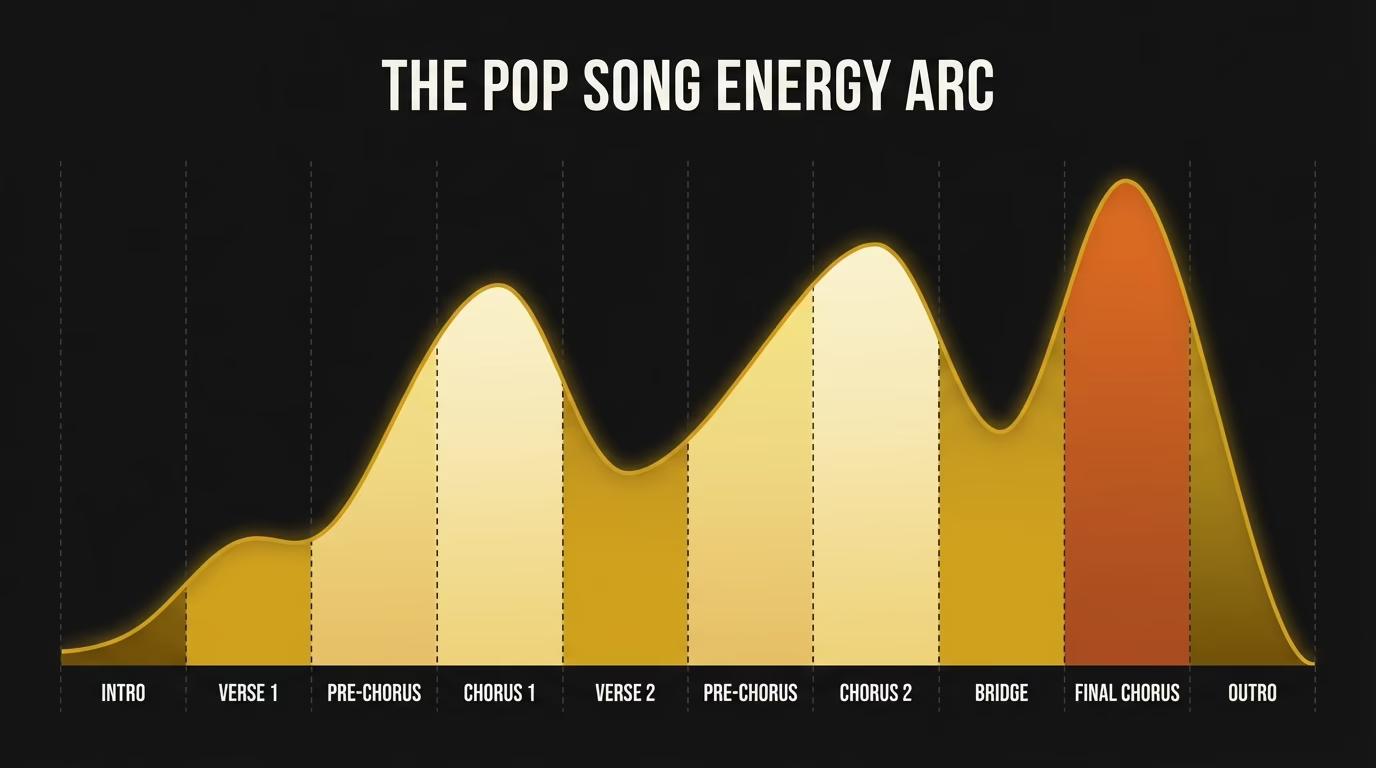
Each time through the cycle, the listener goes deeper. The rises and falls follow an emotional logic: build, release, build higher, release bigger, break the pattern, resolve.
Map the dynamic arc of a song you admire. Draw a line from left to right, plotting energy level (low to high) for each section. You should see clear peaks and valleys. If your own song's arc looks flat, you've found the problem.
Fewer melodies, more impact
One principle from the ebook ties contrast to melody economy: limit the song to three or four distinct melodic ideas. Verse melody, pre-chorus melody, chorus melody, maybe a bridge melody. That's it.
Some writers compose a new melody for every section and end up with seven or eight melodic ideas competing with each other. That dilutes memorability. Martin focuses on a few strong melodies and repeats them with subtle variations. Sometimes the verse and chorus even share melodic material -- the same notes recontextualized through different arrangement and production. One less idea for the listener to track, and more time for the strongest hooks to sink in.
This works with contrast because each section's identity comes primarily from arrangement and production choices, not from melodic novelty. The same melody can feel intimate in a sparse verse and powerful in a full chorus. The contrast does the work.
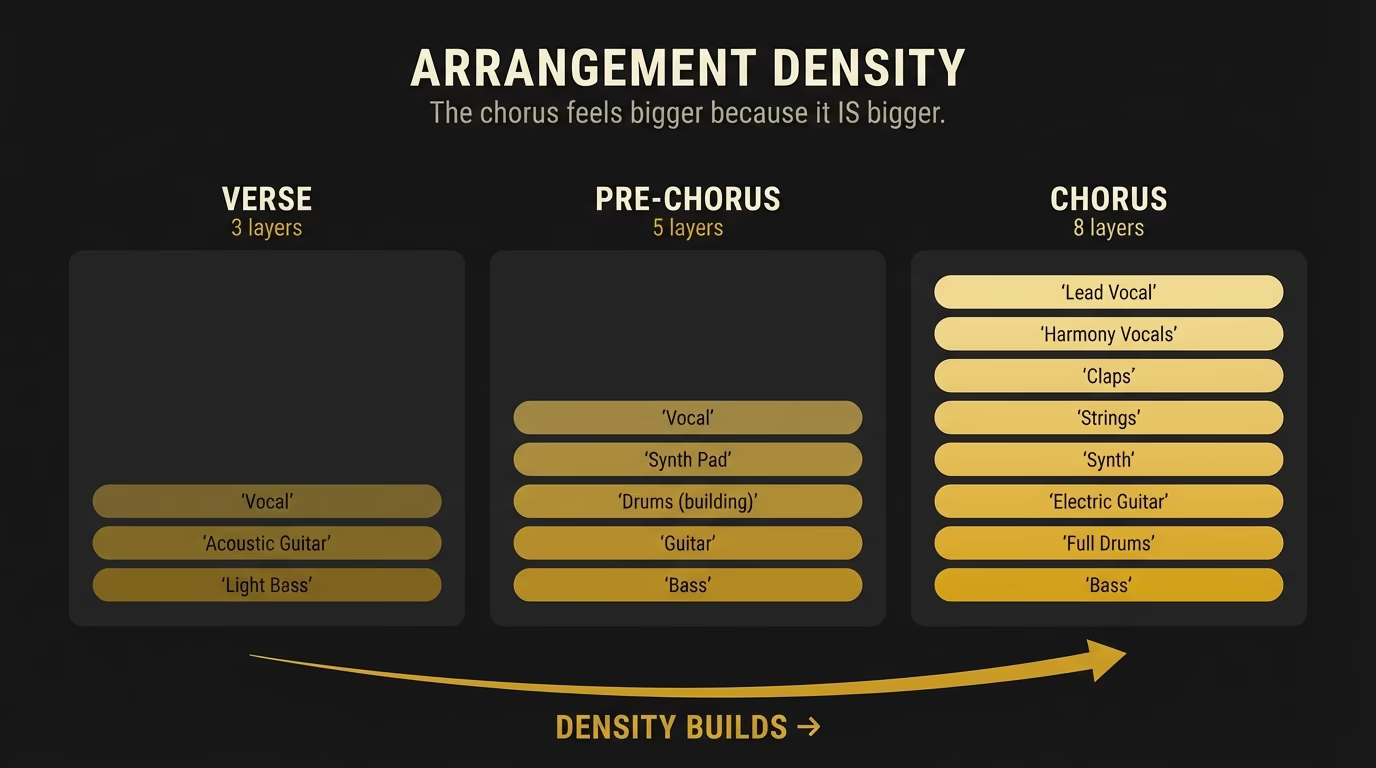
A great pop song isn't just catchy. It's a finely tuned interplay between opposites. Knowing when to push and when to pull back, when to surprise and when to satisfy. That balance is what makes a song feel alive.
Where to go from here
If your songs tend to feel same-y from section to section, start with one dimension of contrast and commit to it. Strip your verse down to voice and a single instrument. Or drop your verse melody a full octave below the chorus. Or cut the drums entirely until the pre-chorus. Pick one gap to widen and see how it changes the chorus.
The skill is in the calibration -- how much to withhold in the verse, how gradually to build in the pre-chorus, how fully to commit in the chorus. Those ratios are what separate songs that sound competent from songs that make people feel something.
The tension-and-release mechanics here -- melodic, harmonic, rhythmic, production -- are dimensions of contrast that Martin manages at once. The Melodic Math ebook breaks down how those dimensions interact, including the buffer technique for resetting the ear and the arrangement escalation patterns that make each chorus hit harder than the last. Songs that feel flat between sections usually have a contrast problem, and the ebook treats that as a central topic.